Safe Use4 min readBy Lola · Updated November 11, 2026
What to Do on Shrooms: 10 Calm Ideas for a Trip Day
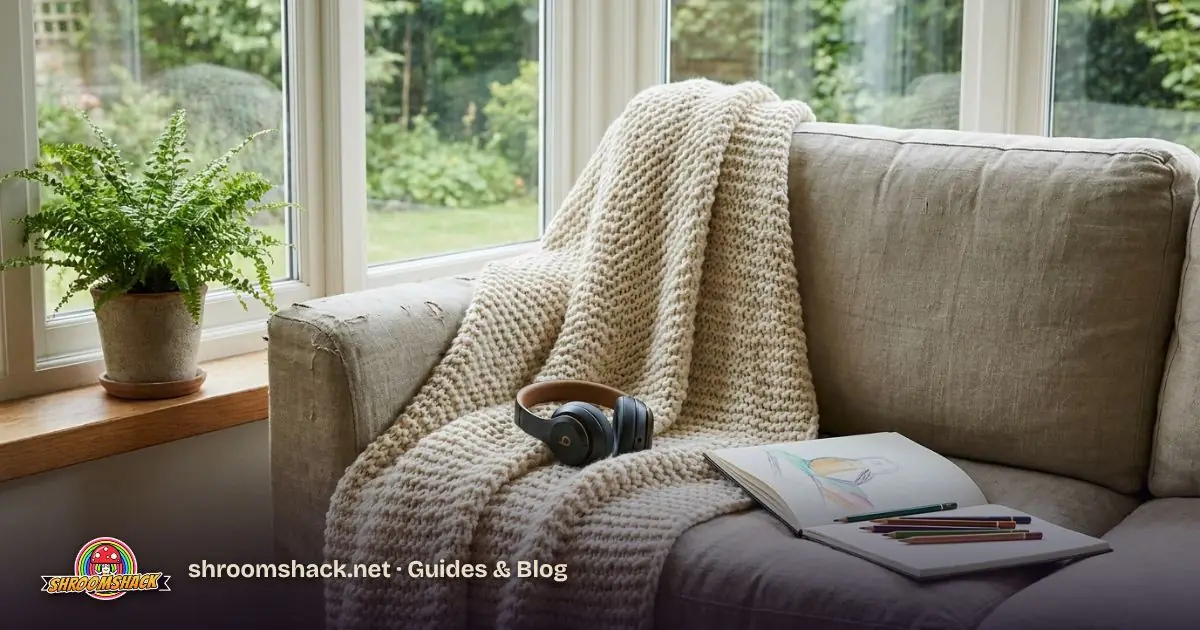
Most of a mushroom trip happens in your own head. Still, what you do with the hours matters. A calm plan gives the mind somewhere to rest. It also leaves less room for worry. Here are ten ideas, from the gentlest to the more active.
None of this is a recipe for a certain experience. Psilocybin is unpredictable. The aim is a safe, comfortable day.
Before you pick an activity
- Plan the whole day. Clear it from start to finish, with nothing to drive to and nobody to call back.
- Have a sober sitter for any full dose, and always for a first trip. Our trip sitting guide explains the role.
- Set things up first. Music, blankets, water, snacks and a notebook should be within reach before you start.
- Keep it simple. You won't want to follow instructions or work anything complicated at the peak.
Our set and setting guide covers mindset and surroundings in more depth.
1. Listen to music
Music is the activity most people come back to. Researchers at Imperial College London interviewed people from a psilocybin depression trial about the music played in their sessions. How people experienced the music was linked to how much their depression scores improved a week later. The strength of the drug alone was not. Music shapes the mood, so choose it with care.
- Make a playlist in advance, mostly without lyrics.
- Use headphones or speakers you don't need to touch.
- Have something calming ready in case a track feels wrong.
Our playlist guide has ideas for each part of the day.
2. Lie down with an eye mask
Closed eyes often bring the strongest imagery. Clinical sessions use an eye mask and headphones for much of the time. Lie somewhere soft and let the music lead. You can sit up whenever you like.
3. Spend time with nature
A garden, a quiet park or even a window with trees can feel very different on mushrooms. A 2019 Imperial College study followed 654 people before and after a psychedelic experience. Their sense of connection to nature rose, and it was still higher two years later. The rise was larger when people said their natural surroundings had shaped the experience.
Stay somewhere private and familiar. Avoid water, cliffs, roads and cold weather. Bring your sitter.
4. Draw, paint or play with clay
Making something without a goal can be a lovely way to spend the come-down. Crayons, markers, watercolours and modelling clay all work. Skip anything sharp, hot or fiddly. Nobody needs to see the result.
5. Write things down
A notebook catches thoughts you may want to remember. Short notes work better than full sentences at the peak. Many people write more as the effects fade. Those notes help with integration in the days after.
6. Breathe slowly
Slow breathing is a simple way to steady yourself, especially during the come-up. Breathe in through the nose for a count of four. Breathe out for a count of six. Repeat for a few minutes. Avoid intense or fast breathwork, which can add dizziness.
7. Talk with someone you trust
Some people want quiet. Others want to talk. A trusted friend or sitter is the best company for that. Keep phones and group chats away. Messages sent during a trip are often regretted later.
8. Watch something gentle
Nature films, slow animation or a fireplace video can be soothing. Choose something you've seen before, with no violence or jump scares. Switch it off if it stops feeling good.
9. Move a little
Stretching, slow dancing or a short walk around the house can release restless energy. Keep the space clear of things to trip over. Stay off stairs, ladders and roads.
10. Do nothing at all
Lying still, watching the light or simply sitting with the feeling is enough. You don't need a list. The best plan leaves room for this too.
Things to skip
- Driving, cycling or swimming. Never, at any dose.
- Cooking with a stove or knives. Prepare food beforehand. Our food guide has ideas.
- Social media, work email, money or big decisions.
- Mirrors, if you feel unsettled. Some people find their reflection strange or upsetting.
- Crowds and strangers, unless you're experienced and with friends.
- Alcohol and other drugs. Read shrooms, alcohol and weed.
If it gets hard
Change one thing. Move rooms, change the music, open a window or lie down with your sitter nearby. Remind yourself that it will pass. Our guide to challenging trips explains what helps. If anyone is in danger, call 911.
Who should not take magic mushrooms
Don't use psilocybin if you are under 19, pregnant or breastfeeding. The same goes if you or your family have a history of psychosis or bipolar disorder. Don't combine it with lithium. Antidepressants can change the effects, so read psilocybin and medications. Start with a low amount and wait at least two hours before taking more. The safety guide and dose sizes guide have the basics. Psilocybin is a controlled substance in Canada.
More things to do on shrooms
Sociedelic, a psychedelic culture magazine, keeps its own list of things to do while tripping.
If a trip felt weaker than you expected, why didn't my shrooms work? lists the nine usual reasons.
Why do eyes-closed visions follow the same few shapes for most people? Read why shrooms make patterns.
Sources
- Kaelen et al. (2018), The hidden therapist: evidence for a central role of music in psychedelic therapy, Psychopharmacology
- Kettner et al. (2019), From egoism to ecoism: psychedelics increase nature relatedness in a state-mediated and context-dependent manner, International Journal of Environmental Research and Public Health
- Johnson, Richards and Griffiths (2008), Human hallucinogen research: guidelines for safety, Journal of Psychopharmacology
- Psilocybin and psilocin (magic mushrooms), Health Canada
What the research says
- Survey study of challenging experiences after ingesting psilocybin mushrooms: acute and enduring positive and negative consequencesCarbonaro TM, et al. (2016), Journal of Psychopharmacology.A survey of nearly 2,000 people about their most difficult mushroom experience, and what made those experiences riskier or more meaningful.
- Harm potential of magic mushroom use: a reviewvan Amsterdam J, Opperhuizen A, van den Brink W (2011), Regulatory Toxicology and Pharmacology.A review for the Dutch government that rated dependence potential low, while flagging mixing with alcohol, setting and panic as the real concerns.
- Dose–response relationships of psilocybin-induced subjective experiences in humansHirschfeld T, Schmidt TT (2021), Journal of Psychopharmacology.A meta-analysis of how the strength of different effects rises with dose, across published studies.
- Pharmacokinetics of escalating doses of oral psilocybin in healthy adultsBrown RT, et al. (2017), Clinical Pharmacokinetics.Measured how quickly psilocin appears in the blood and how long it stays, which is why effects come on in under an hour and fade over several.
Research on psilocybin is still young, and most trials give a measured dose with professional support. Results don't mean any product is safe or effective for you.
This guide is general information, not medical or legal advice. If you have health questions, talk to a health professional.
Your next step
Ready for your first trip?
Not sure where to start? Our starter kits are picked for first-timers. Free shipping across Canada on orders over $130.